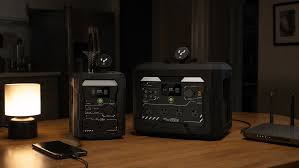

A CPAP machine can make a major difference for people who rely on positive airway pressure therapy during sleep. However, power outages, camping trips, road travel, and other situations without reliable electricity can create a challenge. A properly sized CPAP CPAP battery backup sizing battery backup can help keep the machine operating through the night, but choosing the right capacity requires more than simply looking at a battery’s advertised watt-hours.
Understanding your CPAP’s power requirements, expected runtime, battery efficiency, and additional features can help you select a backup system that provides dependable overnight power.
Why CPAP Battery Capacity Matters
CPAP machines generally operate for several hours while you sleep, so a backup battery needs enough stored energy to support the device for the required period. A battery that is too small may run out before morning, while an unnecessarily large battery can add cost, weight, and inconvenience.
The most important factors are your CPAP’s power consumption and the number of hours you need backup power. A typical overnight period may be around seven to nine hours, but individual sleep schedules vary.
Before purchasing a battery, check the specifications for your exact CPAP model. Power requirements can differ considerably between machines, particularly when accessories such as heated humidifiers or heated tubing are enabled.
Understand Your CPAP’s Power Consumption
The first step in sizing a battery backup is determining how much electricity your CPAP uses. Manufacturers may provide information in watts, volts, amps, or other electrical specifications.
If the device’s power requirement is listed in watts, the calculation is straightforward. For example, if a CPAP consumes an average of 30 watts and you want eight hours of operation, the basic energy requirement would be:
30 watts × 8 hours = 240 watt-hours
This does not mean a 240Wh battery will necessarily provide eight hours of runtime. Real-world battery systems experience conversion losses, and manufacturers may recommend leaving some reserve capacity.
If your CPAP specification is provided in volts and amps, you can estimate power using:
Watts = Volts × Amps
However, this may represent maximum or input power rather than actual average consumption. Whenever possible, use manufacturer-provided operating information or measured consumption for a more accurate estimate.
Consider the Humidifier and Heated Tubing
One of the biggest factors affecting CPAP battery runtime is the use of heated accessories.
A CPAP machine operating without a heated humidifier may consume substantially less energy than the same machine with heating functions enabled. Heated humidifiers and heated tubing require additional electricity because they actively produce and maintain heat.
For overnight backup, consider whether you can operate without these features during an outage. Some users may be comfortable turning off the humidifier or reducing its heating level, while others may depend on humidification for comfortable therapy.
If you intend to use the humidifier and heated tubing normally, include their energy consumption when calculating battery capacity. Otherwise, a battery that appears adequate based on the CPAP’s basic power requirement may provide significantly less runtime than expected.
Calculate Your Estimated Battery Requirement
Once you know the approximate power consumption, multiply it by the number of hours you need.
For example, imagine a CPAP uses approximately 25 watts and you want eight hours of backup:
25W × 8 hours = 200Wh
Next, account for battery and inverter losses. If the system is approximately 85% efficient, the required battery capacity would be higher than 200Wh.
A simple estimate can be calculated as:
Required battery capacity = CPAP watts × hours ÷ efficiency
Using the example:
200Wh ÷ 0.85 ≈ 235Wh
This suggests that a battery with around 235Wh of usable capacity would be a more realistic starting point than a 200Wh battery.
For greater reliability, you may also want additional reserve capacity, especially if battery performance can be affected by temperature, age, or other operating conditions.
Direct DC Power Can Improve Efficiency
Some CPAP battery setups use an AC inverter to convert battery power into household-style alternating current before the CPAP’s power adapter converts it back into DC power.
This can introduce additional energy losses.
A compatible DC power solution may reduce conversion losses by supplying the CPAP with the appropriate DC voltage directly. However, compatibility is essential. Never connect a CPAP to a battery using an improvised cable or an incorrect voltage.
Check the CPAP manufacturer’s requirements and use approved or properly specified power accessories. The goal is not simply to find the shortest electrical path but to provide the correct voltage, current, polarity, and connector configuration.
Think About Real-World Runtime
Advertised battery capacity does not always equal usable capacity. A battery labeled with a specific watt-hour rating may not deliver that entire amount to your CPAP because of system losses, power-management limits, and conversion efficiency.
Battery age can also affect performance. Rechargeable batteries gradually lose capacity over time, meaning an older backup system may provide less runtime than when it was new.
Temperature can be another consideration. Extremely hot or cold conditions can affect battery performance, depending on the battery chemistry and design.
For these reasons, it is wise to avoid sizing a battery so closely that it has no reserve. If your calculated requirement is approximately 200Wh, choosing a system with additional usable capacity can provide a useful margin.
Determine How Many Nights You Need
Overnight use does not always mean one night. If you are preparing for occasional power outages, one full night may be enough. If you are traveling or camping, you may need enough capacity for several nights.
For example, if your estimated requirement is 250Wh per night and you want two nights of backup, the theoretical requirement becomes:
250Wh × 2 = 500Wh
You would then account for efficiency and reserve capacity.
If you plan to recharge the battery during the day, your requirements may be different. A solar panel, vehicle charging system, or electrical outlet can potentially replenish the battery between nights, depending on the equipment and conditions.
Check the Battery’s Output Rating
Capacity is only one part of choosing a CPAP backup battery. The battery also needs to provide sufficient output power.
A battery might have plenty of stored energy but still be unsuitable if its output system cannot handle the CPAP’s startup or operating requirements.
If you use an inverter, check its continuous output rating and compatibility with the CPAP. Also consider whether the inverter produces an appropriate AC waveform for the equipment.
For medical devices, following the manufacturer’s approved power recommendations is particularly important.
Consider Portability
A large battery can provide longer runtime, but it may also be heavier and harder to transport.
For home emergency backup, a larger power station may be practical because weight is less important. For backpacking or air travel, portability may become a major consideration.
Think about where you will use the battery most often. A compact system may be suitable for short outages, while a larger unit may be more appropriate for extended emergencies or multiple nights away from electrical outlets.
Test Your Backup Before an Emergency
After selecting a CPAP battery backup, test it under realistic conditions. Do not wait for an unexpected power outage to discover that the battery does not provide the expected runtime.
If possible, test the setup for a full sleep period using the same CPAP settings and accessories you expect to use during an outage. Pay attention to whether the battery maintains power throughout the night.
Testing can also help identify whether features such as heated humidification significantly reduce runtime.
Maintain the Battery Properly
Proper maintenance can help keep a backup battery ready when needed. Follow the battery manufacturer’s recommendations for charging, storage, temperature, and periodic inspection.
Recharge the battery after use and check its charge level periodically if it is intended for emergency situations. Store it according to the manufacturer’s instructions rather than assuming that every battery should remain continuously connected to a charger.
If the battery shows unusual swelling, damage, overheating, or other signs of failure, discontinue use and follow the manufacturer’s safety guidance.
Final Thoughts
Choosing the right CPAP battery backup starts with understanding your actual energy requirements. Calculate the CPAP’s approximate wattage, multiply it by the number of hours you need, and then account for conversion losses and a reasonable reserve.
Remember that heated humidifiers and tubing can significantly increase energy consumption, while compatible direct-DC power solutions may improve efficiency. Battery output, portability, temperature, age, and the number of nights you need backup power are also important considerations.
For reliable overnight use, the goal is not simply to choose the battery with the largest capacity. Instead, select a properly compatible system with enough usable energy to meet your CPAP’s requirements while providing a practical safety margin. Most importantly, follow your CPAP manufacturer’s power requirements and recommendations when selecting and connecting any backup power solution.