

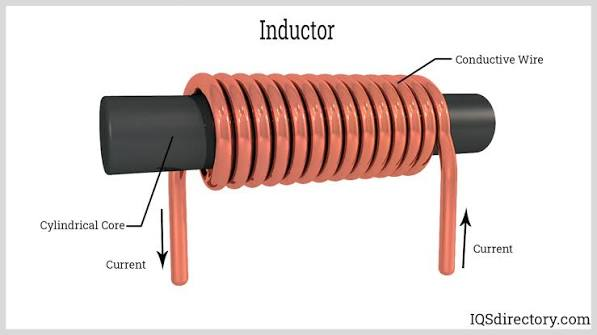
Coil inductance is an important concept in electrical engineering and electronics. It describes the ability of a coil to oppose changes in electric current by storing energy Coil Inductance in a magnetic field. From power supplies and transformers to motors, filters, sensors, and communication equipment, inductive components are used in countless applications.
Understanding coil inductance helps engineers, technicians, students, and electronics enthusiasts select suitable coils and design reliable circuits. Factors such as the number of turns, core material, coil dimensions, and operating conditions all influence the inductance of a coil.
What Is Coil Inductance?
Coil inductance is the property of a coil that causes it to resist changes in current flowing through it. When current passes through a coil, it creates a magnetic field around the conductor. If the current changes, the magnetic field also changes, producing an induced voltage that opposes the change in current.
Inductance is measured in henries (H). In practical circuits, smaller units such as millihenries (mH) and microhenries (µH) are commonly used.
The relationship between voltage, inductance, and changing current can be expressed as:
V = L × (di/dt)
Here, V represents induced voltage, L is inductance, and di/dt represents the rate at which current changes over time.
A higher inductance generally produces greater opposition to rapid changes in current.
How Does a Coil Store Energy?
A coil stores electrical energy in its magnetic field. When current increases through the winding, energy is transferred into the magnetic field. When current decreases, the stored energy can be released back into the circuit.
The energy stored in an ideal inductor can be calculated using:
E = ½LI²
In this equation, E is the stored energy, L is inductance, and I is current.
This energy-storage characteristic makes inductors useful in switching power supplies, voltage regulators, energy conversion systems, and many other electronic applications.
Factors That Affect Coil Inductance
Several physical and electrical factors determine the inductance of a coil. Understanding these factors is important when designing or selecting an inductive component.
Number of Turns
The number of wire turns around the core has a significant effect on inductance. Increasing the number of turns generally increases the magnetic field produced by the coil and therefore increases its inductance.
In many simplified coil designs, inductance is approximately proportional to the square of the number of turns. This means that adding turns can significantly change the inductance value.
Core Material
The material inside a coil can greatly influence its inductance. Air-core coils use air as the magnetic medium, while other designs may use materials such as ferrite or powdered iron.
Magnetic core materials can increase inductance by concentrating the magnetic field. However, the choice of core material must match the intended frequency, current, and operating conditions.
Coil Dimensions
The length, diameter, and overall geometry of a coil also affect its inductance. A longer winding and different cross-sectional dimensions can change the magnetic field distribution.
Engineers consider these dimensions when designing inductors for specific electrical characteristics.
Magnetic Permeability
Magnetic permeability describes how easily a material supports the formation of a magnetic field. A core with higher permeability can increase the inductance of a coil.
However, high permeability does not automatically make a core suitable for every application. Frequency, temperature, magnetic saturation, and losses must also be considered.
Coil Inductance and Frequency
Inductance becomes especially important in alternating-current circuits. The opposition provided by an inductor is called inductive reactance, which can be calculated as:
XL = 2πfL
Here, XL is inductive reactance, f is frequency, and L is inductance.
This equation shows that inductive reactance increases as frequency increases. As a result, an inductor can behave differently at low and high frequencies.
This property is useful in filtering circuits. For example, an inductor may allow lower-frequency signals to pass while providing greater opposition to higher-frequency components, depending on the circuit configuration.
Applications of Coil Inductance
Coil inductance has a wide range of practical applications.
Power Supplies
Inductors are commonly used in switching power supplies and DC-DC converters. They temporarily store energy and help regulate current and voltage during switching operations.
Selecting the appropriate inductance value is essential for achieving stable operation and minimizing unwanted electrical stress.
Transformers
Transformers rely on magnetic coupling between coils. Although transformer operation involves several additional principles, inductance plays a fundamental role in determining how the windings respond to electrical signals.
Different winding arrangements and core materials allow transformers to perform functions such as voltage conversion and electrical isolation.
Motors and Generators
Electrical machines use magnetic fields to convert energy between electrical and mechanical forms. Coils with inductive properties are essential parts of many motor and generator designs.
The characteristics of these windings influence current behavior, magnetic fields, efficiency, and overall machine performance.
Filters
Inductors are widely used in electronic filters. They can help reduce unwanted high-frequency noise or separate different frequency components.
In combination with capacitors and resistors, inductors can form low-pass, high-pass, band-pass, and other filter configurations.
Radio and Communication Systems
Inductors are also important in radio-frequency circuits. They can work with capacitors to create resonant circuits that respond to selected frequencies.
This principle is used in tuning circuits, oscillators, impedance matching networks, and other communication applications.
Measuring Coil Inductance
There are several ways to determine the inductance of a coil. Modern electronic test equipment, such as an LCR meter, can directly measure inductance under specified test conditions.
Another method involves applying a known voltage and measuring the current response over time. In practical engineering, measurements should consider frequency because a real coil may have different characteristics at different operating frequencies.
Resistance, core losses, parasitic capacitance, and temperature can also affect measured performance.
Ideal and Real-World Inductors
An ideal inductor would have inductance without resistance or energy loss. Real coils, however, have additional electrical characteristics.
The wire used to create the winding has resistance, which causes power dissipation. At higher frequencies, effects such as skin effect and parasitic capacitance can become increasingly important.
Core-based inductors can also experience magnetic losses and saturation. These factors mean that an inductor’s rated inductance should always be considered alongside its current rating, resistance, frequency range, and temperature characteristics.
Choosing the Right Coil Inductance
Selecting an appropriate coil requires more than simply choosing an inductance value. Designers should consider the circuit’s operating frequency, maximum current, voltage conditions, physical dimensions, resistance, and acceptable losses.
For power applications, saturation current and thermal performance can be especially important. For high-frequency circuits, parasitic characteristics and frequency response may have greater significance.
A properly selected inductor can improve circuit stability, filtering performance, energy efficiency, and reliability.
Conclusion
Coil inductance is a fundamental electrical property that explains how a coil responds to changes in current and stores energy through its magnetic field. Its value depends on factors including the number of turns, core material, coil geometry, and magnetic properties.
From power conversion and filtering to motors, transformers, and communication equipment, inductive components are essential across modern electrical and electronic technology. Understanding how inductance behaves under different frequencies and operating conditions allows engineers and designers to select components more effectively and develop circuits that perform reliably.